
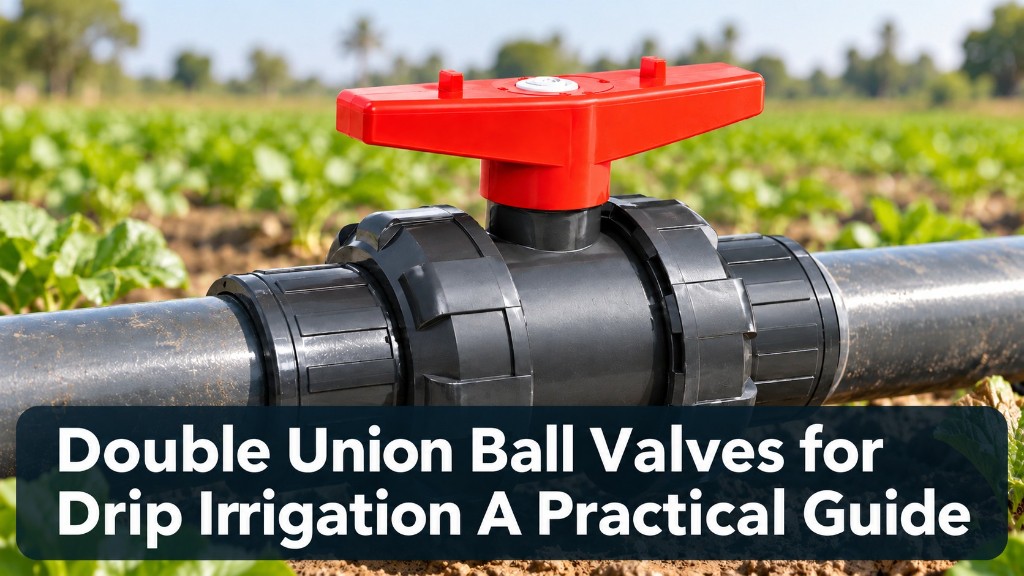
Learn when a double union ball valve helps with irrigation maintenance and what to check before installation.
What is a double union ball valve
A double union ball valve has a removable central valve assembly connected to the line through unions at both ends. When installed according to its instructions, the arrangement can make servicing or replacement easier than cutting a permanently joined section of pipe. The valve still needs correct pressure rating, pipe support and compatible connections.
Where it can be useful
Consider a double union design at an accessible pump-house line, a filtration assembly or a sub-main isolation point where the valve may need future attention. On a large farm, easier access can reduce the work needed to remove a component. The value depends on the installation: a union valve is not automatically necessary at every location.
Check the details before buying
Confirm nominal size and actual connection dimensions, material, pressure-temperature rating, seal compatibility and available replacement parts. Make sure the union nuts can be reached and turned after installation. Compare the space needed for removal with nearby walls, equipment and pipe supports.
Installation and servicing basics
Follow the manufacturer’s joining and tightening instructions. Support the pipe independently so the valve does not carry its weight or sit under bending stress. Before servicing, stop the pump, isolate the line, relieve pressure and drain the section as appropriate. Never loosen a union on a pressurised line. Inspect seals before reassembly and test carefully for leaks.
Choosing for a Gujarat project
Installers and dealers should specify the pipe type, connection, water quality, pressure and quantity when requesting a quotation. FLOTEC shows an RPVC double union ball valve on its website; confirm available sizes and ratings for the exact model at https://flotecvalve.com/products.
Frequently asked questions
Does double union mean the valve works in two directions? The term describes its end connections; confirm permitted flow direction from the product documentation.
Can the valve be removed without stopping the system? Only after the relevant line is safely isolated, depressurised and drained.