
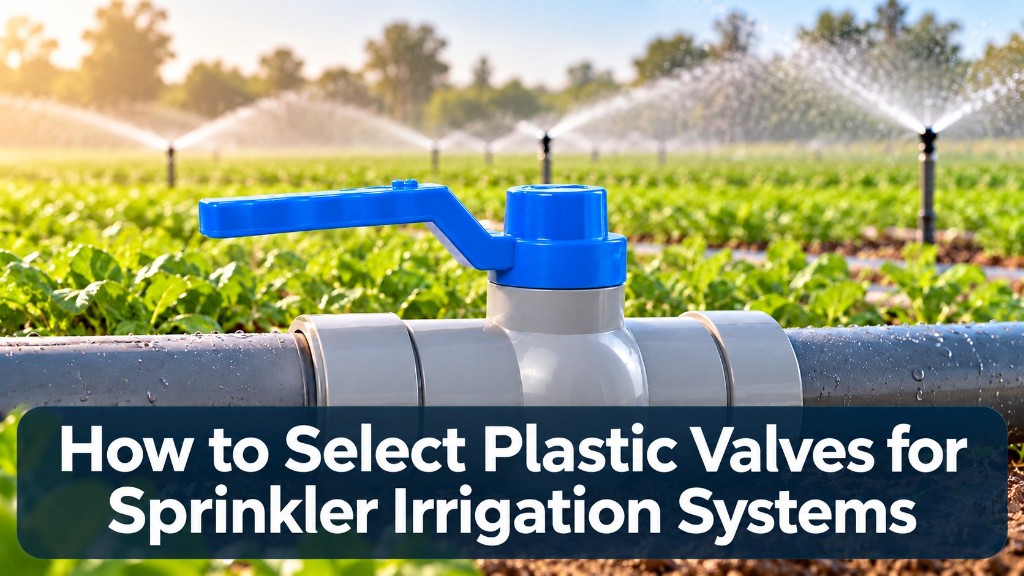
Select sprinkler irrigation valves using zone size, pressure, pipe connections and maintenance requirements.
Start with the sprinkler layout
A sprinkler system often divides a field or landscape into zones. Valves allow operators to isolate and manage those sections while the pump and pipework deliver the required flow. Before choosing a plastic valve, identify each zone, the expected flow and the pressures at the valve and sprinklers.
Size for the system
Match nominal diameter and connection dimensions to the pipe and fittings. The valve’s open-flow characteristics are relevant, but selecting by pipe size alone does not confirm hydraulic performance. The system designer should check pressure losses through the complete network and ensure that sprinklers receive the pressure and flow required for the chosen arrangement.
Select suitable material and rating
Use the maximum expected pressure and operating temperature, including transient conditions, to check the model’s rating. Confirm material and seal compatibility with the water and any additives. For outdoor installations, ask about exposure protection and physical support. Do not use an unrated component simply because it resembles a suitable valve.
Make zone control easy
Place handles where they can be reached without stepping into vulnerable crop areas. Mark the zones and direction of flow where helpful. If a section needs regular removal, a union connection may make maintenance more convenient. Keep a record of valve sizes and installation dates for future replacement.
Before asking for a quote
Prepare a list showing each valve’s size, end connection, material, maximum pressure and quantity. Include the installation district and any need for spare seals or fittings. FLOTEC lists valves for sprinkler and agriculture applications; browse https://flotecvalve.com/products and confirm the model’s suitability with the supplier.
Frequently asked questions
Can a ball valve control sprinkler pressure precisely? A manual ball valve can restrict flow, but precise pressure regulation calls for equipment designed and selected for that duty.
Should every zone have a valve? Independent isolation is often useful; the final layout should be designed for the project.